

Why Crawl Space Moisture Gets Worse in Fall
Found a crack in your basement wall, or a damp patch on the floor after a storm? The first question is almost always the same: is this a foundation problem or a water problem? Across the DMV, the honest answer is often both, but the two are fixed in different ways. Foundation repair restores the structure of your home. Basement waterproofing controls the water around it. Getting the diagnosis right means you pay for the fix your home actually needs.
Foundation problem or water problem? The short version
Ask two questions: is something moving, and is water getting in? Movement points to foundation repair. Water points to basement waterproofing or crawl space repair. Many homes in Alexandria, Arlington, and Fairfax need a bit of both, because water is often what causes the movement in the first place.
| What you notice | What it usually points to | Where to start |
|---|---|---|
| Wide, horizontal, or stair-step wall cracks | Structural movement | Foundation repair |
| Walls bowing or leaning inward | Soil and water pressure on the wall | Bowing wall repair |
| Water at the wall and floor joint, puddles after rain | Water entering the basement | Wet basement solutions |
| Musty smell, damp air | Ongoing moisture | Basement waterproofing or crawl space moisture control |
| Standing water or condensation under the house | Wet crawl space | Crawl space repair |
| Sloping floors, sticking doors | Settling foundation | Sinking and settling repair |
Six warning signs and what they mean
Cracks in basement or foundation walls
Thin vertical hairline cracks are common as concrete cures and are often cosmetic. Horizontal cracks, stair-step cracks in block walls, and any crack that is widening deserve a closer look, since they can signal that the wall is moving. Our guide to bowing and cracking walls shows what to watch for.
Bowing or leaning walls
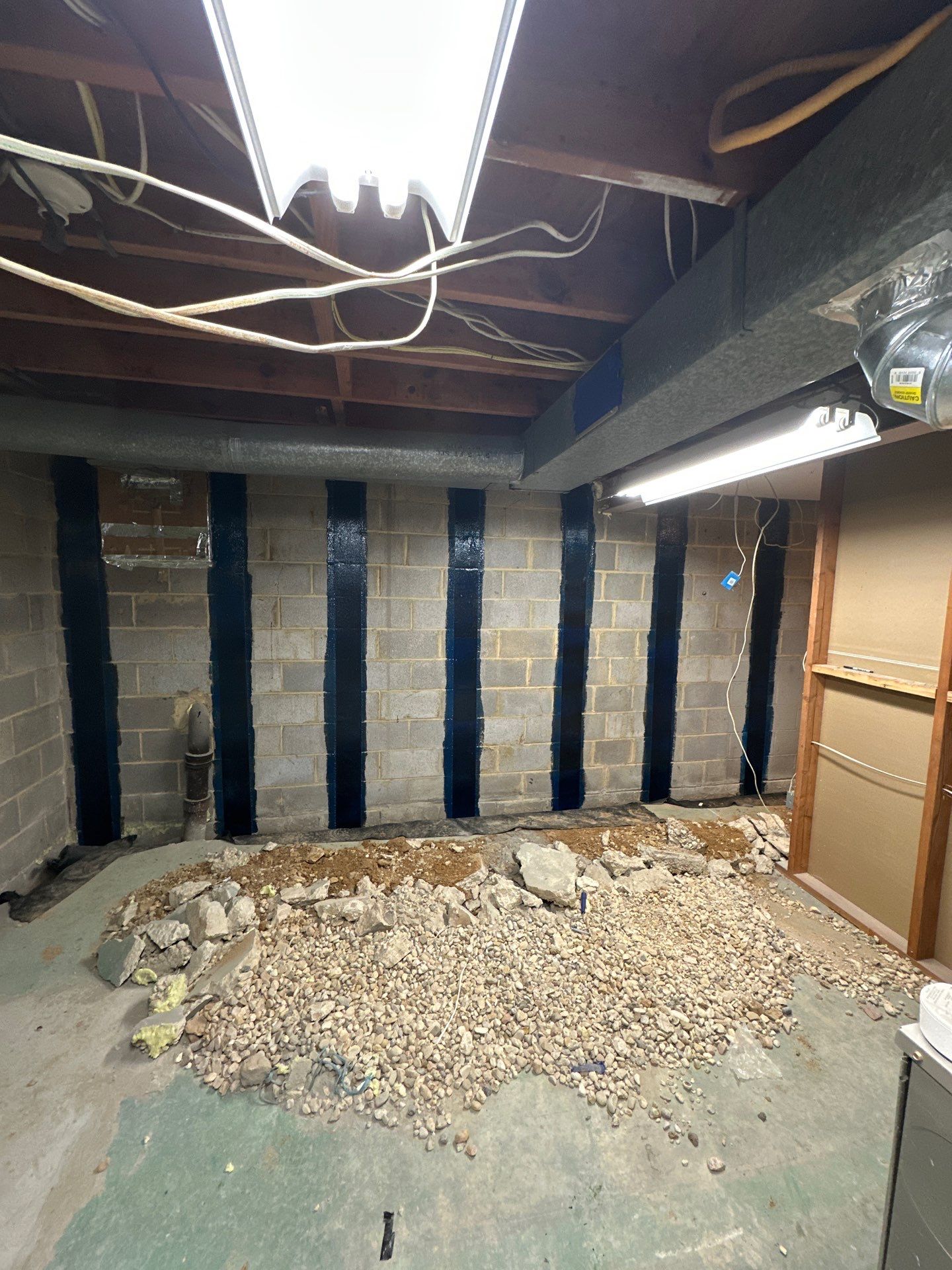
When wet soil pushes against a foundation wall, the wall can bend inward over time, especially after heavy rain. This is a structural issue, so waterproofing alone will not straighten it. Repairs like steel wall bracing or carbon fiber wall repair stabilize the wall, and we explain why basement walls bow after heavy rain in a separate post.
Water seepage
Dampness along the base of the wall, wet spots on the floor, or puddles after a storm mean water is finding a way in. The fix depends on where it enters: interior waterproofing manages water that reaches the basement, while exterior waterproofing stops it at the outside of the wall. Not sure which suits your home? Read exterior vs. interior waterproofing.
Musty odors
A damp, earthy smell is often the first sign of a moisture problem, even when you cannot see water. It is worth tracing before mold or damaged finishes show up. The source may be a basement, a crawl space, or poor drainage outside.
A wet crawl space
Standing water, damp insulation, and condensation under the house can lead to rot and sagging floors over time. Depending on what an inspection finds, the solution may include crawl space waterproofing, encapsulation, or support for sagging floors.
Settling or uneven floors
Floors that slope, doors that stick, and gaps around windows can point to a foundation that is settling. Those cases often call for piers, and our comparison of push piers vs. helical piers explains the difference. If the floor above a crawl space feels bouncy or low, see sagging floor joists.
Why many DMV homes need both
Homes across Northern Virginia and Maryland deal with heavy storms, older construction in neighborhoods like Old Town Alexandria, and soils that hold water. When water collects around a foundation, it adds pressure to the walls and finds its way through cracks and joints. That is why a good plan often pairs structural repair with better water control, such as exterior drainage systems that carry water away from the house. Fixing only one side can leave the other problem to return.
A quick way to sort out what you have
- Is anything moving? Look for widening cracks, walls that lean, or floors that slope. If yes, start with a structural evaluation.
- Is water getting in? Look for seepage, stains, puddles, or a persistent damp smell. If yes, start with a waterproofing or drainage evaluation.
- Where does it show up? Basement walls, the floor, or the crawl space each point to a different solution.
- When does it happen? Only after heavy rain suggests drainage and water entry. Year-round dampness suggests a moisture source that needs to be found.
If you answered yes to more than one, you are not alone. That is the most common situation we see, and it is the reason a single inspection that looks at both is worth it.
See how it plays out on real DMV homes
These projects show how the diagnosis leads to the repair:
- Basement waterproofing in Old Town Alexandria
- Basement waterproofing in Fairfax, VA
- Helical piers foundation repair in Rose Hill, Alexandria
- Crawl space encapsulation in Old Town Alexandria
Browse more on our case studies page.
Not sure what your home needs? Get it looked at
Guessing can get expensive. A professional inspection looks at both the structure and the way water moves around your home, so the recommendation matches the real cause. If you have noticed any of the signs above, request a free inspection and we will help you figure out the next step for your home in Alexandria, Arlington, Fairfax, or elsewhere in the DMV.
FAQs
Can I waterproof my basement without doing foundation repair?
Sometimes. If the walls and floors are stable and the issue is only water entry, waterproofing and drainage may be enough. If the structure is moving, it needs to be addressed too.
Does every foundation crack mean I need repair?
No. Small vertical hairline cracks are often cosmetic. Cracks that are horizontal, stair-stepped, wider than a pencil line, or getting bigger should be checked.
Will waterproofing fix a bowing wall?
No. Waterproofing and drainage can reduce the water pressure that contributes to bowing, but a wall that has already moved needs structural stabilization.
How do I know if my crawl space needs attention?
Standing water, musty odors, damp or sagging insulation, visible mold, and soft or bouncy floors above are all reasons to have it inspected.
What should I do first?
Document what you see with dated photos and measurements, keep an eye on whether it changes, and schedule an inspection. If cracks are widening quickly, walls are visibly moving, or water is coming in steadily, do not wait.
Can one inspection cover both foundation and water issues?
Yes. Because the two are so often connected, it makes sense to evaluate them together.
Contact DMV
We’d love to help. Let us know what you need.
"*" indicates required fields