

Why Basement Walls Bow After Heavy Rain in Northern Virginia
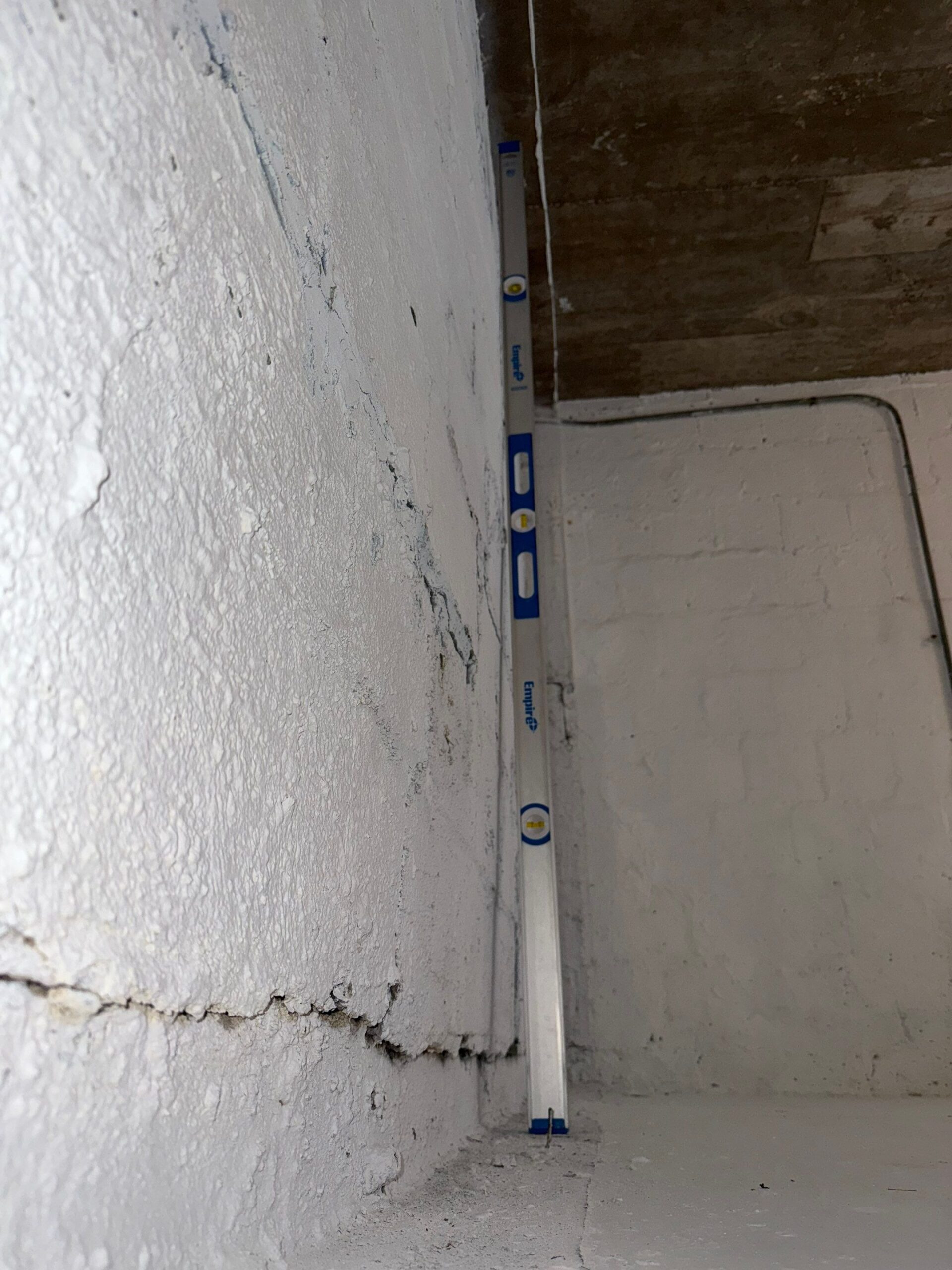
Why Basement Walls Bow After Heavy Rain in Northern Virginia
Heavy rain can make existing basement wall problems show up fast. One week, the basement wall may only have a small crack. After a few storms, that same wall may look like it is bowing inward, leaking, or developing a long horizontal crack across the middle.
For homeowners in Arlington, Alexandria, Fairfax, and throughout Northern Virginia, this is not unusual. Many homes in the DMV region deal with a combination of dense soils, older foundations, poor drainage, grading issues, and repeated wet/dry soil cycles. When too much water collects around the outside of a basement wall, the pressure against that wall can become more than the structure was designed to handle.
That is when homeowners may start seeing warning signs like bowing walls, stair-step cracks, horizontal cracks, water seepage, or doors and windows that no longer open smoothly.
Why Heavy Rain Puts Pressure on Basement Walls
Your basement walls do more than hold up the house. They also resist the pressure of the soil outside.
After a heavy rain, water soaks into the ground around your home. If that water drains away properly, the pressure may stay manageable. But when soil holds water or the yard slopes toward the foundation, water can collect against the basement walls.
This creates hydrostatic pressure, which is the force of water pushing against the foundation. Over time, that pressure can cause basement walls to crack, bow, lean, or leak.
This is especially important in Northern Virginia because many properties have older drainage systems, compacted soil, clay-heavy conditions, or grading that has settled over time. Even a home that has been dry for years can begin showing problems if water starts collecting near the foundation after storms.
Why Northern Virginia Homes Are Vulnerable
Homes in Arlington, Alexandria, Fairfax, and surrounding DMV communities often face foundation and basement wall problems for a few local reasons.
First, many older homes were built before modern drainage and waterproofing standards. Their footing drains may be clogged, undersized, missing, or no longer moving water away effectively.
Second, soil around the foundation can settle over time. When this happens, water may pond near the basement wall instead of flowing away from the home.
Third, parts of Northern Virginia are known for clay soils that can expand when wet and shrink when dry. When those soils are placed near basement walls, they can increase pressure against the foundation during wet conditions.
That combination of heavy rain, poor drainage, aging foundations, and soil movement can lead to visible basement wall damage.
Signs Heavy Rain May Be Affecting Your Basement Walls
A bowing wall problem usually does not start with the wall collapsing. It often starts with small changes that get worse over time.
Common warning signs include:
- Horizontal cracks across basement walls
- Stair-step cracks in block or brick walls
- Walls that appear to curve, bulge, or lean inward
- Water seepage through cracks or wall joints
- Damp spots, staining, or white mineral residue
- Doors or windows that stick after storms
- Basement floors or walls that feel increasingly uneven
- Cracks that seem to widen after heavy rain
If you notice these signs, the issue may be more than cosmetic. The wall may be under pressure from saturated soil, poor drainage, or foundation movement.
How Poor Drainage Makes Bowing Walls Worse
Drainage is one of the most important parts of basement wall protection.
When gutters overflow, downspouts dump water too close to the home, or the yard slopes toward the foundation, water collects exactly where it causes the most damage. That water saturates the soil around the basement wall and increases pressure against the foundation.
This is why bowing wall repair often connects directly to basement waterproofing and drainage solutions. Stabilizing the wall is important, but if the water problem remains, the pressure may continue.
Depending on the home, drainage-related repairs may include:
- Downspout extensions
- Regrading around the foundation
- Exterior drainage systems
- French drains
- Basement waterproofing
- Sump pump improvements
- Crack sealing
- Foundation wall drainage upgrades
The best repair plan starts by identifying where the pressure is coming from, not just covering the visible crack.
When Bowing Basement Walls Need Structural Repair
Not every wall crack requires the same repair. Some early-stage cracks may be stabilized with a lower-profile solution, while more severe movement may require a stronger structural system.
DMV Foundation Solutions may recommend different wall repair options depending on the wall type, severity of bowing, access, water conditions, and long-term structural needs.
Common repair options include:
Carbon Fiber Wall Reinforcement
Carbon fiber wall reinforcement is often used when a basement wall has early movement or cracking but has not shifted too far inward. The carbon fiber straps are installed directly against the wall to help resist further movement.
This can be a good option when the wall needs stabilization but does not require a large bracing or anchor system.
Steel I-Beam Wall Bracing
Steel I-beam wall bracing is used when a basement wall needs strong structural support from inside the basement. The beams are installed vertically against the wall to help resist inward pressure and stabilize the structure.
This solution is often recommended when the wall movement is more advanced or when the home needs a stronger interior bracing system.
Foundation Wall Anchors
Foundation wall anchors may be used when soil pressure is pushing a basement wall inward and the property allows for exterior anchor placement. The anchor system helps stabilize the wall and may allow gradual adjustment over time, depending on the structure’s condition.
Basement Waterproofing and Drainage
If water pressure is contributing to the problem, wall repair may need to be paired with waterproofing or drainage improvements. This helps reduce the conditions that caused the wall to move in the first place.
A Local Example: Foundation Repair in Rose Hill, Alexandria
DMV Foundation Solutions has seen how local soil, water, and foundation conditions can work together. In one Rose Hill, Alexandria case study, a homeowner noticed structural cracking, sticking doors, and widening gaps in a 70-year-old home.
Instead of recommending unnecessary full-perimeter repairs, DMV Foundation Solutions helped the homeowner pursue a targeted repair plan confirmed by an independent structural engineer. The project included helical pier installation, waterproofing membrane work, footing drain improvements, and downspout redirection to help protect the home long term.
That case is a useful reminder: foundation problems are not always solved by one repair alone. Sometimes the best solution combines structural stabilization with better water management.
What to Do If Your Basement Wall Bows After Heavy Rain
If your basement wall looks worse after storms, do not ignore it. Take photos of the wall, note when the cracks or leaks appear, and look outside to see whether water is collecting near the foundation.
You should also check for:
- Short downspouts
- Overflowing gutters
- Soil sloping toward the home
- Pooled water near the foundation
- Basement wall leaks
- New or widening cracks
Then schedule a professional inspection. A trained foundation repair specialist can determine whether the wall needs monitoring, crack repair, reinforcement, wall anchors, bracing, waterproofing, drainage improvements, or a combination of repairs.
Schedule a Basement Wall Inspection in Northern Virginia
Bowing basement walls are usually a sign that pressure is building against your foundation. The sooner you identify the cause, the easier it is to protect the home from worsening structural damage.
DMV Foundation Solutions helps homeowners throughout Arlington, Alexandria, Fairfax, Northern Virginia, and the greater DMV region inspect bowing walls, diagnose drainage issues, and choose the right repair plan.
If you are seeing horizontal cracks, leaning walls, water seepage, or basement wall movement after heavy rain, schedule a free inspection today.
Contact DMV
We’d love to help. Let us know what you need.
"*" indicates required fields