Mon-Fri 9am to 5pm

4307 Wheeler Avenue, Suite 100

Carbon Fiber Straps vs. Steel I-Beams: How Bowing Basement Walls Are Evaluated

Foundation cracks or a wet basement? Learn when DMV homes need foundation repair, basement waterproofing, or both. Schedule a free inspection.
DMV Foundation Solutions

If a basement wall in your Alexandria, Arlington, or Fairfax home has started to curve inward, you have probably seen two repair names come up: carbon fiber straps and steel I-beams. Both stabilize a wall from the inside, and both have a place. The right one depends on what the wall is doing, not on which product sounds stronger. Here is how the choice is made.

What carbon fiber straps and steel I-beams have in common

Both are interior repairs, so they do not require digging up the yard around your house. Both are designed to stabilize a bowing wall and resist further inward movement. Neither one fixes the cause on its own. Walls usually bow because soil and water are pressing on them from the outside, which we cover in why basement walls bow after heavy rain. That is why a good plan looks at the wall and the water around it.

How they differ

Compare

Carbon fiber straps

Steel I-beams

What it is

Flat, high-strength straps bonded to the wall surface and anchored at the top and bottom

Vertical steel beams set against the wall, anchored at the floor and secured near the top

Look and space

Low profile, sits close to the wall, and can be painted or finished over

Takes up more room along the wall

Corrosion

Does not rust

Steel is typically coated or treated for moisture protection

Best suited to

Walls with limited inward movement that are otherwise sound

Walls that need more rigid support

Learn more

Carbon fiber wall repair

Steel wall bracing

The last row of that comparison matters most. Which method fits is decided by the condition of your wall, and that takes an inspection.

How a bowing wall is evaluated

A professional looks at several things before recommending anything. We do not use a single number to decide, because every wall and every house is different. These are the questions that guide the choice:

  1. What is the wall made of? Concrete block and poured concrete behave differently, and the cracking pattern tells a story. Our page on bowing and cracking walls shows what horizontal and stair-step cracks can mean.
  2. How far has it moved, and where? A wall that has shifted slightly is a different situation from one that is leaning or bulging noticeably. The location of the bow along the wall matters too.
  3. Is it still moving? Dated photos and measurements over time help show whether the wall is stable or getting worse.
  4. What is the condition of the wall itself? Mortar joints, cracks, and the overall soundness of the wall affect which repair can do the job.
  5. What is causing the pressure? Poor drainage, saturated soil, and water collecting at the foundation all push on the wall. If the cause is not addressed, the wall can keep loading the repair.
  6. How is the space used? A finished basement, storage, or a utility area may favor a slimmer repair, as long as the wall condition allows it.
When carbon fiber may fit, and when steel may fit

In general, carbon fiber straps are a common choice when a wall has bowed a modest amount and is otherwise in good shape. Steel I-beams are often considered when a wall needs stiffer, more robust support. Those are tendencies, not rules. Some walls call for a different approach altogether, such as wall anchors or work on the outside of the foundation, and an honest evaluation will say so. If a contractor recommends one product before looking closely at your wall, ask why.

The wall is only half the picture

Stabilizing a wall does not remove the water that pushed on it. Many homes in Northern Virginia pair wall reinforcement with drainage or basement waterproofing so the wall is not asked to hold back the same pressure year after year. Interior waterproofing is one way to manage water that reaches the basement. If you are not sure whether your problem is structural, water-related, or both, our guide on foundation repair or basement waterproofing can help you sort it out.

A real example from Springfield, VA

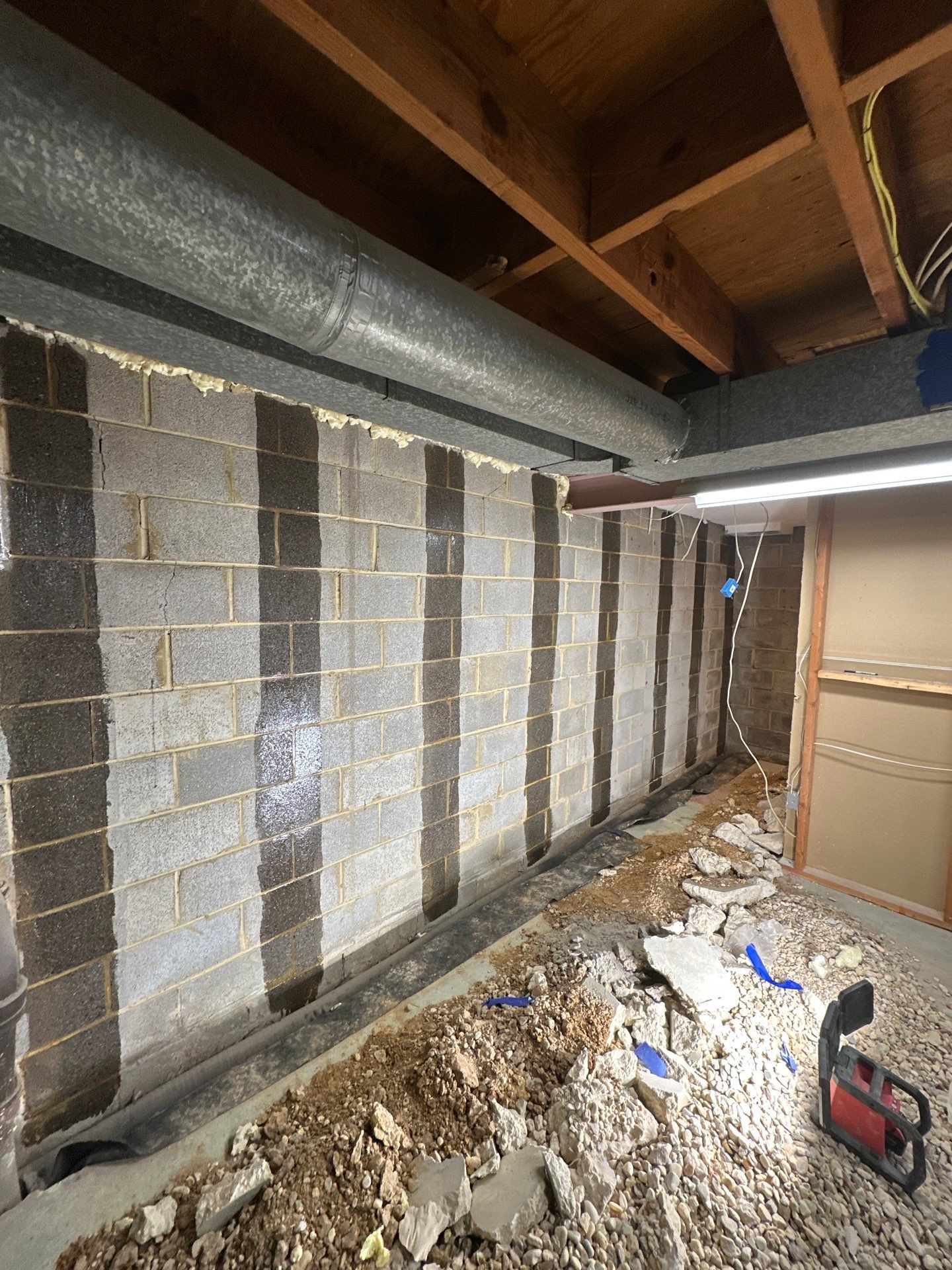
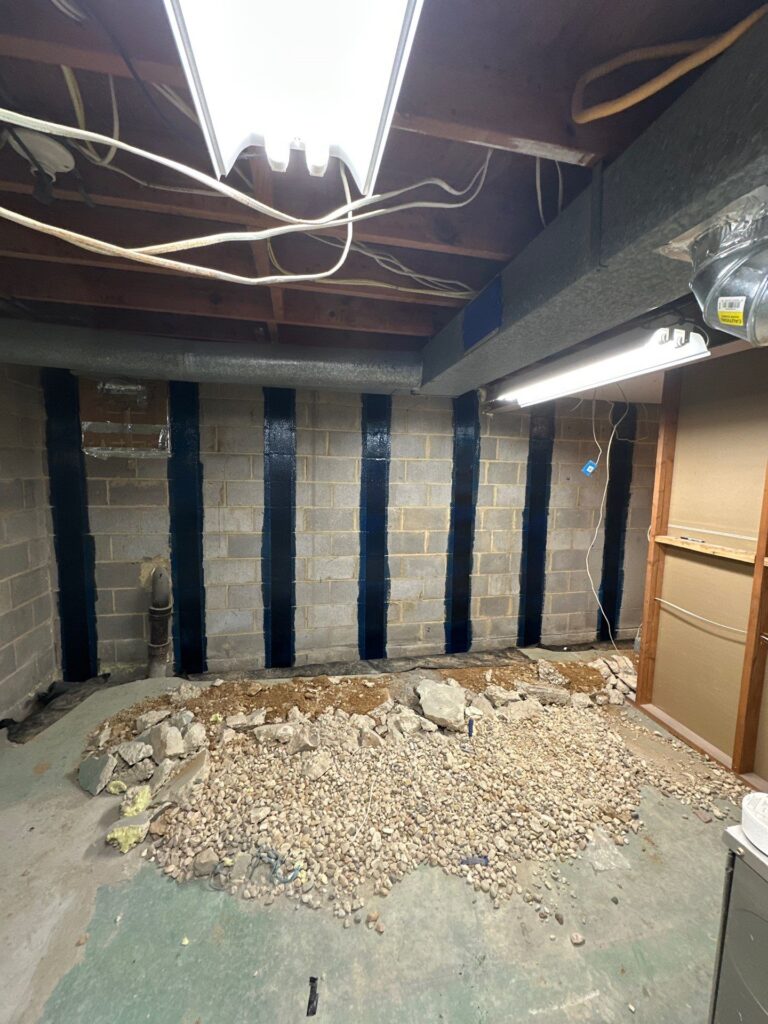
In Springfield, a bowing concrete block wall was reinforced with carbon fiber straps. The project also included an interior French drain, drainage stone, and a dimpled waterproofing membrane, so the repair addressed both the wall and the water. You can read the full project in our Springfield, VA carbon fiber case study, and browse more local projects on our case studies page.

Not sure which repair your wall needs? Get it looked at

Bowing walls in Arlington, Alexandria, Fairfax, and across the DMV rarely look the same twice. A site visit lets us measure the wall, check the cracks, and look at how water moves around your home, so the recommendation matches what is happening. If you have noticed a wall curving inward, new horizontal cracks, or stair-step cracks in block, request a free inspection. You can also read about our full range of foundation repair services.

FAQs

Are carbon fiber straps or steel I-beams better?

Neither is better in every case. Each suits different wall conditions. The better choice is the one that matches how your wall has moved and what it is made of, which an inspection can determine.

Can these repairs push my wall back to straight?

They are mainly meant to stabilize a wall and resist further movement. Whether any improvement is possible depends on the wall and the method, so ask your inspector what to expect for your home rather than assuming.

Do I need to dig outside my house?

Both methods are installed from inside the basement. Some homes may still need drainage or other work on the outside, depending on what an inspection finds.

Will waterproofing fix a bowing wall by itself?

No. Waterproofing and drainage can reduce the water pressure that contributes to bowing, but a wall that has already moved needs structural stabilization. See bowing and cracking walls.

What should I do while I wait for an inspection?

Take dated photos, measure any cracks, and note whether anything changes after rain. If a wall is visibly moving, cracks are widening quickly, or water is coming in steadily, do not wait to call.

If a basement wall in your Alexandria, Arlington, or Fairfax home has started to curve inward, you have probably seen two repair names come up: carbon fiber straps and steel I-beams. Both stabilize a wall from the inside, and both have a place. The right one depends on what the wall is doing, not on which product sounds stronger. Here is how the choice is made.

What carbon fiber straps and steel I-beams have in common

Both are interior repairs, so they do not require digging up the yard around your house. Both are designed to stabilize a bowing wall and resist further inward movement. Neither one fixes the cause on its own. Walls usually bow because soil and water are pressing on them from the outside, which we cover in why basement walls bow after heavy rain. That is why a good plan looks at the wall and the water around it.

How they differ

Compare

Carbon fiber straps

Steel I-beams

What it is

Flat, high-strength straps bonded to the wall surface and anchored at the top and bottom

Vertical steel beams set against the wall, anchored at the floor and secured near the top

Look and space

Low profile, sits close to the wall, and can be painted or finished over

Takes up more room along the wall

Corrosion

Does not rust

Steel is typically coated or treated for moisture protection

Best suited to

Walls with limited inward movement that are otherwise sound

Walls that need more rigid support

Learn more

Carbon fiber wall repair

Steel wall bracing

The last row of that comparison matters most. Which method fits is decided by the condition of your wall, and that takes an inspection.

How a bowing wall is evaluated

A professional looks at several things before recommending anything. We do not use a single number to decide, because every wall and every house is different. These are the questions that guide the choice:

  1. What is the wall made of? Concrete block and poured concrete behave differently, and the cracking pattern tells a story. Our page on bowing and cracking walls shows what horizontal and stair-step cracks can mean.
  2. How far has it moved, and where? A wall that has shifted slightly is a different situation from one that is leaning or bulging noticeably. The location of the bow along the wall matters too.
  3. Is it still moving? Dated photos and measurements over time help show whether the wall is stable or getting worse.
  4. What is the condition of the wall itself? Mortar joints, cracks, and the overall soundness of the wall affect which repair can do the job.
  5. What is causing the pressure? Poor drainage, saturated soil, and water collecting at the foundation all push on the wall. If the cause is not addressed, the wall can keep loading the repair.
  6. How is the space used? A finished basement, storage, or a utility area may favor a slimmer repair, as long as the wall condition allows it.

When carbon fiber may fit, and when steel may fit

In general, carbon fiber straps are a common choice when a wall has bowed a modest amount and is otherwise in good shape. Steel I-beams are often considered when a wall needs stiffer, more robust support. Those are tendencies, not rules. Some walls call for a different approach altogether, such as wall anchors or work on the outside of the foundation, and an honest evaluation will say so. If a contractor recommends one product before looking closely at your wall, ask why.

The wall is only half the picture

Stabilizing a wall does not remove the water that pushed on it. Many homes in Northern Virginia pair wall reinforcement with drainage or basement waterproofing so the wall is not asked to hold back the same pressure year after year. Interior waterproofing is one way to manage water that reaches the basement. If you are not sure whether your problem is structural, water-related, or both, our guide on foundation repair or basement waterproofing can help you sort it out.

A real example from Springfield, VA

In Springfield, a bowing concrete block wall was reinforced with carbon fiber straps. The project also included an interior French drain, drainage stone, and a dimpled waterproofing membrane, so the repair addressed both the wall and the water. You can read the full project in our Springfield, VA carbon fiber case study, and browse more local projects on our case studies page.

Not sure which repair your wall needs? Get it looked at

Bowing walls in Arlington, Alexandria, Fairfax, and across the DMV rarely look the same twice. A site visit lets us measure the wall, check the cracks, and look at how water moves around your home, so the recommendation matches what is happening. If you have noticed a wall curving inward, new horizontal cracks, or stair-step cracks in block, request a free inspection. You can also read about our full range of foundation repair services.

FAQs

Are carbon fiber straps or steel I-beams better?

Neither is better in every case. Each suits different wall conditions. The better choice is the one that matches how your wall has moved and what it is made of, which an inspection can determine.

Can these repairs push my wall back to straight?

They are mainly meant to stabilize a wall and resist further movement. Whether any improvement is possible depends on the wall and the method, so ask your inspector what to expect for your home rather than assuming.

Do I need to dig outside my house?

Both methods are installed from inside the basement. Some homes may still need drainage or other work on the outside, depending on what an inspection finds.

Will waterproofing fix a bowing wall by itself?

No. Waterproofing and drainage can reduce the water pressure that contributes to bowing, but a wall that has already moved needs structural stabilization. See bowing and cracking walls.

What should I do while I wait for an inspection?

Take dated photos, measure any cracks, and note whether anything changes after rain. If a wall is visibly moving, cracks are widening quickly, or water is coming in steadily, do not wait to call.

Contact DMV

We’d love to help. Let us know what you need.

"*" indicates required fields

1
2
3
This field is for validation purposes and should be left unchanged.
Service*
basement waterproofing icon
foundation repair icon
crawl space encapsulation icon
other icon

Get in touch

We’d love to help. Let us know what you need.

"*" indicates required fields

1
2
3
This field is for validation purposes and should be left unchanged.
Service*
basement waterproofing icon
foundation repair icon
crawl space encapsulation icon
other icon