

Why Crawl Space Moisture Gets Worse in Fall
What Happens Under Your Home When the Seasons Change
Most homeowners do not think about their crawl space until something feels wrong inside the house. A musty smell that was not there before. Floors that feel colder than usual. A bedroom that stays humid no matter what you do with the thermostat. In Arlington, Alexandria, Fairfax, and across the DMV region, these problems tend to show up in the fall, and there is a reason for that.
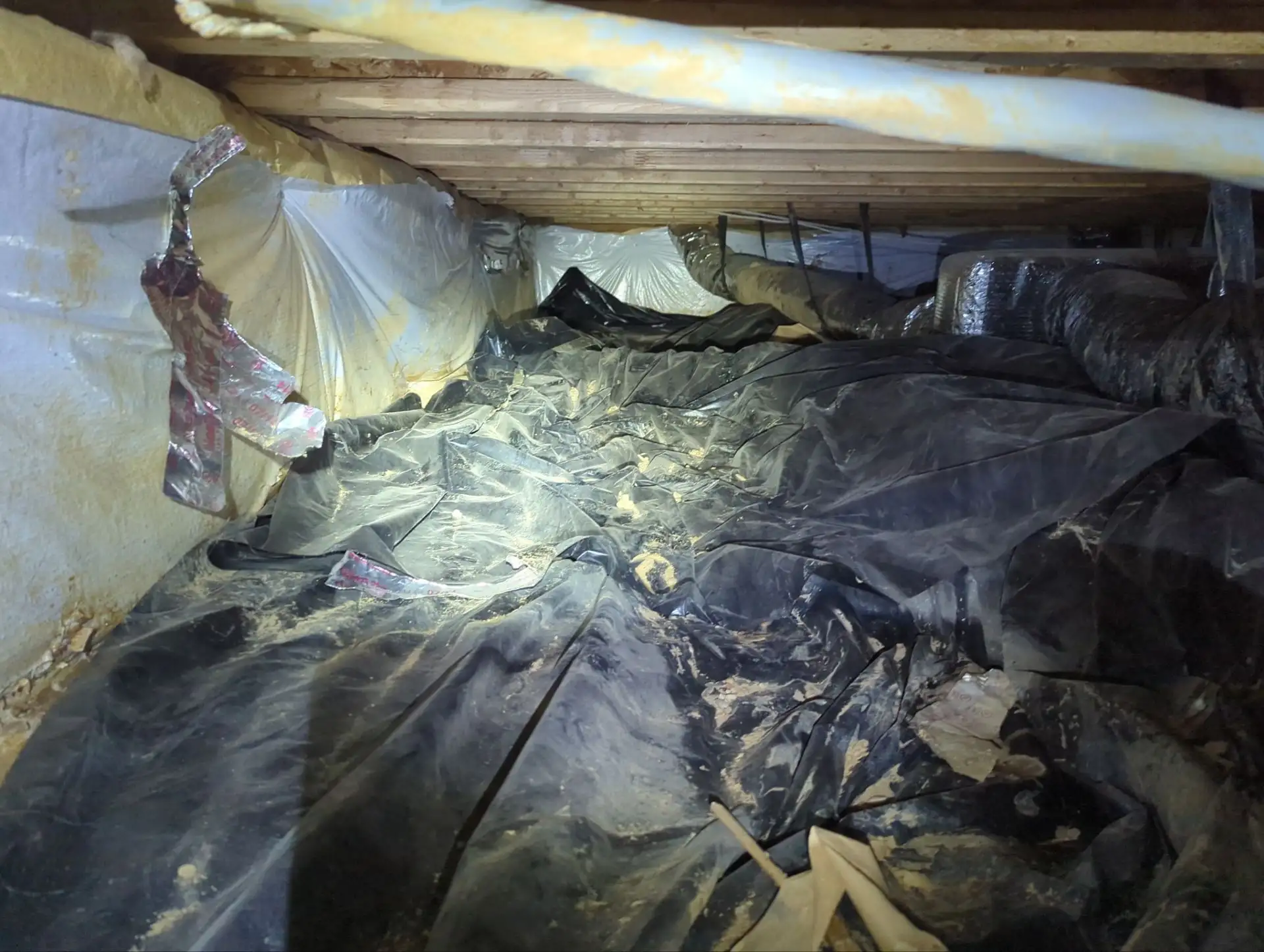
As temperatures start dropping in September and October, the air outside cools down faster than the air trapped beneath your home. That temperature difference creates condensation inside the crawl space, the same way a cold glass sweats on a warm day. If your crawl space has exposed soil, open vents, or an aging vapor barrier, that moisture has nowhere to go. It sits on your floor joists, collects on insulation, and feeds the conditions that lead to mold, wood rot, and structural damage over time.
Fall does not create crawl space problems. It exposes the ones that were already there.
What Homeowners Actually Notice First
The crawl space itself is out of sight for most people, so the first signs usually show up in the living areas above. Here is what we hear most often from homeowners in Northern Virginia heading into fall:
- Musty or damp odors: The air in your crawl space does not stay down there. It rises through gaps in the subfloor and gets pulled into the home through what is called the stack effect. If the crawl space is damp, the living areas above will smell like it.
- Cold or uneven floors: Moisture-damaged insulation sags and loses its ability to regulate temperature. Homeowners in older Arlington and Alexandria homes often notice this first in kitchens and hallways over the crawl space.
- Higher indoor humidity: If your home feels more humid than it should, even with the HVAC running, the crawl space may be adding moisture to the air faster than the system can remove it.
- Pest activity: Damp, dark environments attract insects, rodents, and other pests. A spike in pest activity near the foundation in fall can point to moisture issues underneath.
- Condensation on windows or walls: When excess moisture from below meets cooler interior surfaces, you may notice water droplets forming on windows, especially in the mornings.
None of these signs are things you should ignore until spring. Crawl space moisture problems in Alexandria tend to compound through the winter because the space stays sealed and cold, and whatever moisture is trapped inside continues working against the wood, insulation, and air quality of the home.
Why Fall Is the Turning Point in the DMV
Northern Virginia’s climate makes fall a particularly risky time for crawl spaces. Summer brings high humidity and heavy rainfall, which saturates the soil around and beneath your foundation. By September, that moisture is already inside the crawl space. When nighttime temperatures start dipping into the 50s and 60s while the ground stays warm and wet, condensation increases.
Homes in Fairfax, Bethesda, Herndon, and throughout the DMV region are especially vulnerable if they have vented crawl spaces. Vents were originally designed to let moisture escape, but in a humid climate they do the opposite: they pull warm, moist air in during the summer and trap cold, damp air inside during the fall and winter.
Older homes in Alexandria and Arlington that still have original vapor barriers or exposed dirt floors are at the highest risk. A thin, deteriorating vapor barrier does very little to block ground moisture once the soil is saturated.
When Moisture Becomes a Structural Concern
Not every damp crawl space needs emergency repair. But there are signs that moisture has moved past a comfort issue and into something that affects the structure of the home.
- Soft or bouncy floors can mean the floor joists or supports beneath the home are weakening from prolonged moisture exposure.
- Visible mold on wood framing means humidity has been high enough, long enough, for biological growth to take hold. This does not go away on its own.
- Sagging insulation is a clear indicator that moisture has been present for a while. Once insulation absorbs water, it loses its effectiveness and adds weight to the structure it is attached to.
- Standing water or wet soil in the crawl space means water is actively entering, not just condensing. This often requires drainage or waterproofing in addition to moisture control.
If you are seeing any of these, it is worth getting a professional into the crawl space before winter. Problems that sit through December, January, and February tend to come back in the spring as bigger, more expensive repairs.
What You Can Do About It
The right solution depends on what is causing the moisture and how far it has progressed. For some homes, the fix is straightforward. For others, it takes a combination of approaches:
- Crawl space encapsulation seals the space with a heavy-duty vapor barrier, closes vents, and controls humidity with a dehumidifier. This is the most comprehensive solution for homes dealing with chronic moisture, odors, or mold concerns. It turns the crawl space from a damp, uncontrolled void into a clean, dry, sealed environment.
- Drainage and waterproofing may be needed if water is actively entering the crawl space through the soil or foundation walls. Interior drainage systems and sump pumps can capture and remove water before it sits beneath the home.
- Crawl space repair addresses damage that moisture has already caused, including joist reinforcement, support post installation, insulation replacement, and mold remediation.
In many cases, homeowners in the DMV benefit from a combination of encapsulation and targeted repair work. The key is understanding what is happening beneath the home before deciding on a plan. That starts with an inspection.
Do Not Wait for Spring
Fall is when crawl space moisture problems reveal themselves. Winter is when they get worse. The best time to address what is going on beneath your home is before the cold sets in and the crawl space becomes harder to access and slower to dry out.
If you have noticed musty odors, cold floors, or humidity changes in your Arlington, Alexandria, or Fairfax home this fall, schedule a free crawl space inspection. We will go under the house, document what we find, and give you a clear answer on what needs to be done and what does not.
Contact DMV
We’d love to help. Let us know what you need.
"*" indicates required fields